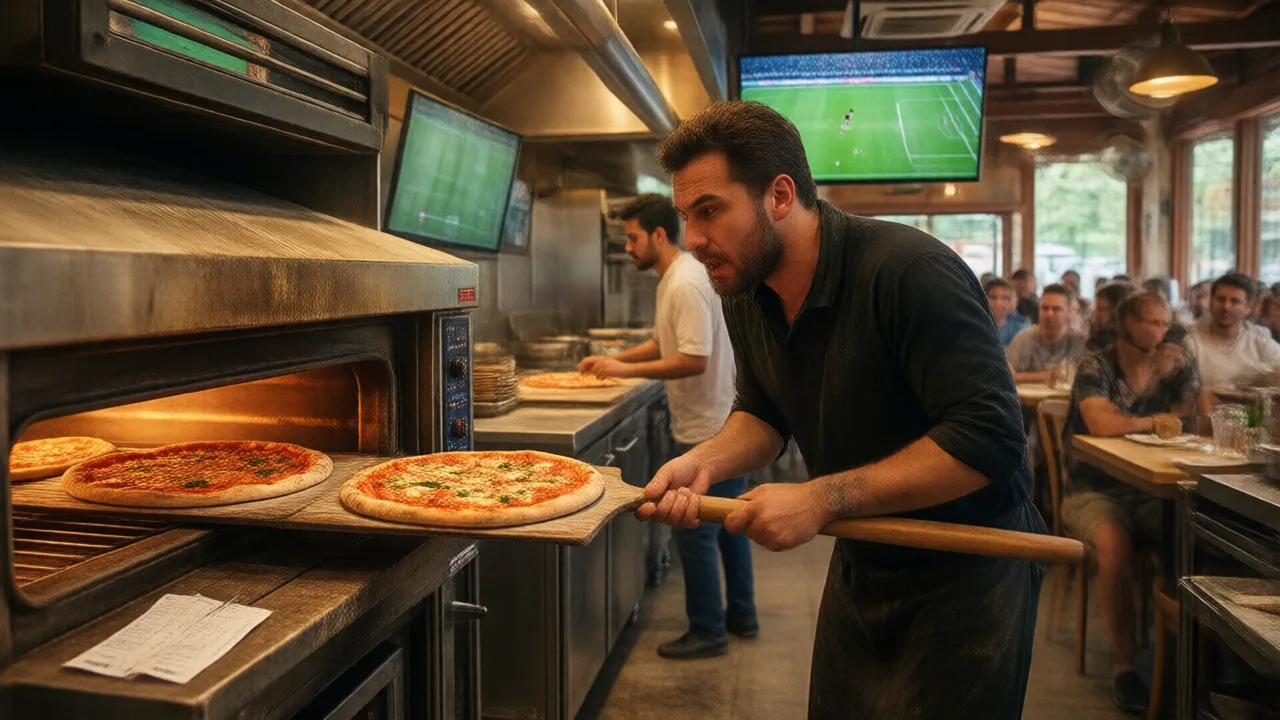
World Cup 2026: The Pizza Rush of the Decade
The 2026 FIFA World Cup is now over, but the operating lesson remains useful: major watch events turn ordinary pizza demand into compressed phone, pickup, oven, and delivery pressure.
The event context
According to FIFA's official schedule, the 2026 tournament ran from June 11 through July 19, 2026, with 48 teams and 104 matches across 16 host cities in Canada, Mexico, and the United States. For pizzerias, that mattered because the match calendar created demand spikes outside the normal weekend dinner pattern.
Host cities such as Dallas, Houston, Los Angeles, Miami, New York/New Jersey, Philadelphia, San Francisco Bay Area, and Seattle had obvious stadium and fan-zone demand. But non-host markets also saw watch-party behavior: office lunches around weekday matches, early dinner orders before evening kickoffs, late-night pickup, and larger group tickets on elimination games.
What match-day surges usually break
- The phone line. Customers ask about viewing, timing, specials, delivery zones, and group orders while staff are trying to run food. If phone orders still require slow manual entry, the POS becomes part of the bottleneck.
- The order queue. Halftime and pre-kickoff demand compress orders into short windows. Order-ahead slots and honest pickup promises protect the kitchen better than a fixed twenty-minute estimate.
- The oven. Oven capacity is a hard ceiling. A shop can sell more than it can bake, which creates late food, refunds, and rushed cut-table mistakes.
- Delivery dispatch. More orders are not always better if drivers are sent too far, too late, or without clear ready status.
- Inventory. Cheese, dough, wings, boxes, and two-liter bottles often run out before slow-moving menu items do. A match menu should be designed around items the shop can replenish and produce cleanly.
Oven math for future event nights
Your oven sets a ceiling on event-night revenue. The useful playbook is to push order-ahead so the queue forms before the game window, not inside it. Stage dough and sauce for the highest-volume sizes, reduce one-off specials that slow the make line, and quote pickup times from real kitchen load.
For a deck oven, the operator should know how many large pies can bake per cycle and how many cycles fit inside each thirty-minute window. For a conveyor oven, the question becomes belt speed, pie spacing, and cut-table labor. In both cases, the POS should help managers see the promise-time backlog before staff accept another wave of orders.
Post-event report to save
On August 31, 2026, the most valuable work is no longer preparation for the final. It is preserving the data. Save a report package for the tournament period and compare it against normal weeks. The package should include sales by hour, order channel, item mix, voids, refunds, late orders, delivery zone performance, labor by role, customer complaints, and phone missed-call notes.
Do not blend all matches together. A weekday afternoon match stresses staffing differently from a Sunday night match. A local-team match changes order timing differently from a neutral game. A knockout game produces more group orders than an early group-stage game. Tag those patterns now while staff still remember what happened.
Also save qualitative notes from the floor. Managers should record which specials slowed the make line, which phones questions repeated, where drivers waited, and which pickup shelf labels confused customers. Those notes explain the POS numbers and make the next event plan more practical.
Event playbook for the next rush
- Build an event menu: focus on pies, wings, drinks, bundles, and add-ons that move quickly through the kitchen.
- Open order-ahead slots early: give customers a reason to place the order before the rush arrives.
- Protect the phone: use a trained phone station or AI overflow for routine ordering and status questions.
- Throttle delivery zones: long trips may need narrower windows or higher minimums when the kitchen is overloaded.
- Staff by station: add help at the bottleneck, not wherever there is an available person.
- Review after each event: update prep quantities, promise-time rules, and staffing templates before the next big day.
What to change in the POS
Create daypart buttons for event bundles, temporary prep-time rules, limited delivery-zone rules, and a simple reason code for event-related refunds or remakes. If the POS can tag these orders, the owner can compare event performance later instead of relying on memory.
The lesson from World Cup 2026 is not limited to soccer. The same workflow applies to NFL Sundays, college football, playoffs, graduations, school fundraisers, concerts, and local stadium traffic. A pizzeria that turns one event into a repeatable operating file will be better prepared every time demand arrives in a wave.
Ready before the next kickoff?
KwickOS runs the whole floor — POS, kiosks, online ordering and reporting — and KwickPhone answers every call with AI. Want a proven standalone system? KwickPOS is a cloud + offline hybrid POS for restaurant teams that need dependable pizza workflows.