
Pizza cheese prices 2027: USDA forecast and pie math
Cheese is usually one of the biggest ingredient costs on a pizza, and flour is in every one. In October 2026 the U.S. Department of Agriculture published new forecasts for both, and they point in different directions. This guide turns those numbers into per-pie arithmetic you can run on your own recipe, and gives you a simple rule for when to change menu prices and when to leave them alone.
What USDA published
The World Agricultural Supply and Demand Estimates (WASDE) report approved October 9, 2026 includes USDA's dairy and grain outlook. Three parts of it matter to a pizza shop.
- Cheese forecasts were lowered. USDA writes that "butter and cheese price forecasts are decreased based on recent prices and growth in butterfat production" for both 2026 and 2027. The annual cheese price forecast is now $1.525 per pound for 2026 (down from $1.570 in September) and $1.615 for 2027 (down from $1.645).
- Cheese is still cheaper than in recent years. The same table shows annual averages of $1.8634 in 2024 and $1.7878 in 2025.
- The wheat crop is small. USDA puts 2026/27 U.S. wheat production at 1,534 million bushels and says it "remains the smallest U.S. wheat production since 1970." The season-average farm price is forecast at $6.30 per bushel, compared with $5.06 for 2025/26. USDA also notes that Hard Red Winter wheat is trading at "significantly higher prices than last year."
USDA's cheese figure is a simple average of AMS commodity cheese prices across the year. It is not a mozzarella quote and it is not what your distributor charges. It is still a useful signal, because it shows which way the market under your invoice is likely to move.
The market is moving faster than the forecast
Annual averages hide how much cheese can move in a week. USDA's Point the href (in the body and in the sources list) to an archived copy of Volume 93, Report 44 (an AMS/MyMarketNews archive entry for report 2998, or a self-hosted archived PDF) before publishing. shows CME 40-pound blocks between $1.7300 and $1.7450 Monday through Thursday. On Friday, October 30, they fell $0.1375 in one day and closed at $1.5975. The weekly block average was $1.7095.
The same report lists CME cash-settled cheese futures on October 29 at $1.684 for November 2026 and $1.580 for December 2026. Futures are not a promise. They do show that, on October 29, traders priced December cheese about 10 cents below November.
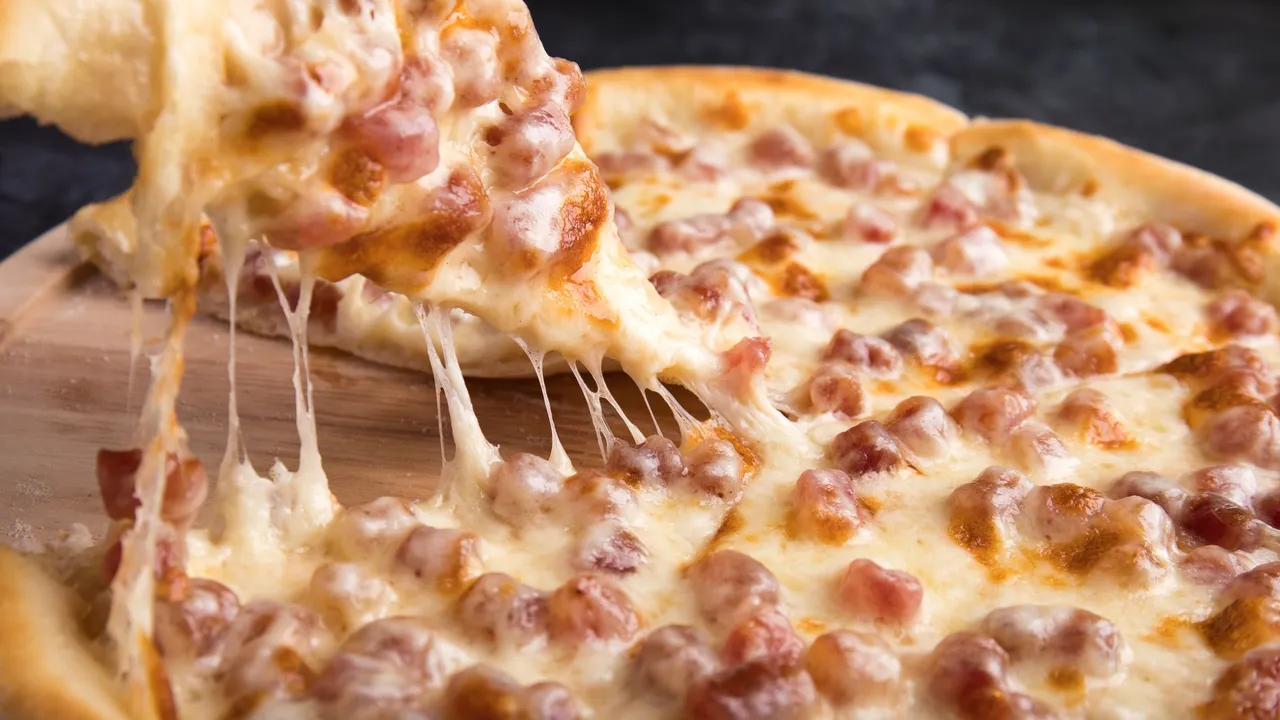
Worked example: what a cheese move costs per pie
Use your own recipe weights here. The numbers below are only an example, not a standard.
Say a shop puts 0.5 lb of cheese on a large pie and sells 1,000 large pies a week.
| Price change per lb | Change per pie (0.5 lb) | Change per week (1,000 pies) | Change per year (52 weeks) |
|---|---|---|---|
| +$0.05 | +$0.025 | +$25 | +$1,300 |
| +$0.09 (USDA 2026 to 2027 forecast: $1.525 to $1.615) | +$0.045 | +$45 | +$2,340 |
| -$0.1375 (the Oct 30, 2026 one-day block drop) | -$0.069 | -$69 | -$3,575 if it lasted a year |
| -$0.2628 (2025 average $1.7878 to 2026 forecast $1.525) | -$0.131 | -$131 | -$6,833 |
The formula is simple: pounds of cheese per pie x price change per pound x pies sold. If your distributor adds a markup on top of the commodity price, the change per pound you actually pay can differ. Ask your rep how your mozzarella price is set, and whether it follows a market index or a fixed contract.
Two things stand out in this example. First, USDA's forecast increase for 2027 is about four and a half cents a pie. That is real money over a year, but it is not a reason to reprint menus in a panic. Second, a single day of spot trading can move cost more than the whole annual forecast does: the October 30 block drop of 13.75 cents was bigger than USDA's 9-cent forecast change for 2027. That is why checking monthly matters more than reacting to one headline.
Flour: a slower, different risk
Wheat runs the other way. The forecast season-average farm price of $6.30 is $1.24 a bushel, or about 25 percent, above the 2025/26 figure of $5.06. USDA lowered the forecast by $0.10 from September, so the number is still moving.
Farm wheat is only one part of what a bag of flour costs. Milling, protein spec, freight and your distributor's terms all add to it, so a 25 percent rise in farm wheat does not mean a 25 percent rise in flour. What it does mean is that your next flour price change is more likely to go up than down. Before your next order:
- Ask your supplier whether your flour price is fixed, and until when.
- Find out which wheat class your flour is milled from, since USDA says Hard Red Winter is uncompetitive in export markets with significantly higher prices than last year.
- Weigh your dough balls for a week. Overweight dough costs you on every pie, and a few extra grams adds up faster when flour costs more.
Other toppings in the same report
The WASDE price table also covers meat. USDA forecasts hog prices (barrows and gilts, live equivalent) at $55.00 per cwt for the fourth quarter of 2026, down from $67.86 in the third quarter, then $60, $65 and $68 for the first three quarters of 2027. USDA says hog price forecasts were lowered "on persistent weakness in the pork cutout." Broiler price forecasts were lowered for the fourth quarter of 2026. These are live-animal and whole-bird composite prices, not pepperoni, sausage or wing quotes, so treat them as a direction, not a cost.
Decision table: when to change menu prices
Pick a trigger before prices move, so the decision is not made during a Friday rush.
| What your monthly re-cost shows | What to do |
|---|---|
| Food cost on your top three pies within 1 point of your target | Leave menu prices alone. Keep checking monthly. |
| Cheese cost per pie up for two months in a row | Audit portioning first (scale checks at the make line), then review the price of extra-cheese and specialty pies. |
| Flour or dough cost up after a supplier price change | Re-cost every size, and check whether your smaller pies carry more dough per dollar of menu price than your large ones. |
| Food cost more than 2 points over target for a full quarter | Plan one menu price change, with a date, instead of several small ones. Update online menus, third-party listings and phone scripts on the same day. |
| Cheese cost per pie falling | Do not cut prices right away. Use the room to absorb flour and labor increases, or fund a limited promotion you can end cleanly. |
The 1-point and 2-point thresholds are starting points. Set your own based on your margins.
Monthly re-costing checklist
- Pull last month's invoices for cheese, flour and your top three meat toppings. Write down the price per pound or per bag.
- Check your recipe cards against what the make line actually uses. Weigh five random pies of your best seller.
- Re-cost your three best-selling pies in every size, plus half-and-half and extra-cheese modifiers.
- Compare with last month and with your target food-cost percentage.
- Use the decision table above. Record what you decided and why.
- Look at the next USDA report. WASDE is scheduled for November 10 and December 10, 2026, and January 12, 2027, according to the October report.
This is easier when inventory and sales sit in one place. KwickOS puts POS and inventory on one platform, so the usage side of the check comes from the same system that rings up the pies.
The bottom line for pizzerias
USDA expects cheese to stay well below its 2024 and 2025 averages through 2027, with a modest rise next year. Flour is the bigger risk heading into winter, because of a very small wheat crop. Neither forecast replaces your own invoices. Run the per-pie math each month, decide your price triggers ahead of time, and change menu prices once, on purpose, when the numbers hold.
Frequently asked questions
What is USDA's cheese price forecast for 2027?
In the October 9, 2026 WASDE report, USDA forecasts an average cheese price of $1.615 per pound for 2027, down from its September forecast of $1.645. The 2026 forecast is $1.525. Both figures are averages of AMS commodity cheese prices, not mozzarella quotes.
Will cheese go up or down for pizzerias in 2027?
USDA's forecast shows a modest rise from the 2026 average, about 9 cents per pound, while staying well below the 2025 average of $1.7878. Spot prices can move more than that in a single day, as the 13.75-cent block drop on October 30, 2026 showed, so check your own invoices monthly.
How do I calculate what a cheese price change costs per pizza?
Multiply the pounds of cheese on the pie by the change in price per pound. For example, 0.5 lb of cheese and a 9-cent increase comes to about 4.5 cents per pie. Multiply by weekly pie count to see the weekly effect.
Why might pizza flour cost more this winter?
USDA estimates the 2026/27 U.S. wheat crop at 1,534 million bushels, the smallest since 1970, with a season-average farm price of $6.30 per bushel against $5.06 a year earlier. Farm wheat is only part of flour cost, so ask your supplier how and when your price will change.
When does USDA publish its next forecast?
According to the October 2026 report, the next WASDE releases are November 10 and December 10, 2026, then January 12, 2027.
Sources
- World Agricultural Supply and Demand Estimates (WASDE-676), October 2026, USDA World Agricultural Outlook Board, 2026-10-09
- Dairy Market News, Week of October 26-30, 2026 (Volume 93, Report 44), USDA Agricultural Marketing Service, 2026-10-30
- KwickOS home page, KwickOS
Checked November 3, 2026. Photo: Mathias Reding / Pexels.
Ready for your next rush?
KwickOS runs the whole floor — POS, kiosks, online ordering and reporting — and KwickPhone answers every call with AI. Want a proven standalone system? KwickPOS is a cloud + offline hybrid POS for restaurant teams that need dependable pizza workflows.